
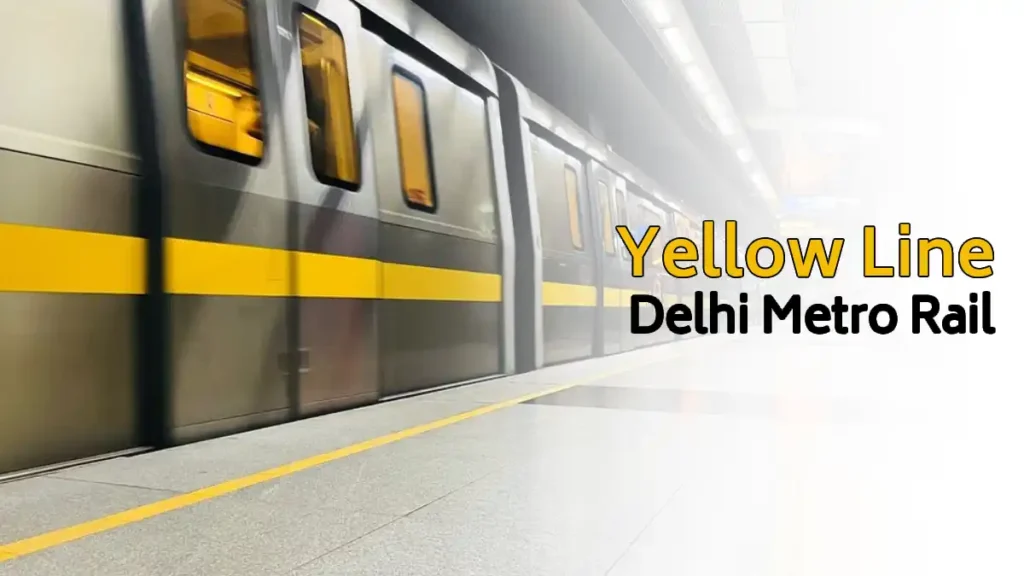
The Yellow Line functions as the central gem of Delhi Metro because it serves as an essential transport corridor between the old city center of Delhi and the new urban development region of Gurugram. The 48 kilometer route contains 37 stations which operate as the busiest route in Delhi because it transports more than 1.5 million daily passengers.
Yellow Line Key Features:
Total Length:
48 km
Number of Stations:
37
Operational Since:
2004
Interchange Stations:
8
Train Frequency:
Every 2-5 min during peak
Average Travel Time:
69 minutes (end-to-end)
Complete Station List: Navigating the Yellow Line
The Yellow Line connects Samaypur Badli in North Delhi through 37 stations to Millennium City Centre Gurugram in Haryana over a 49-kilometer distance.
- Samaypur Badli
- Rohini Sector - 18, 19
- Haiderpur Badli Mor
- Jahangirpuri
- Adarsh Nagar
- Azadpur
- Model Town
- Guru Teg Bahadur Nagar
- Vishwavidyalaya
- Vidhan Sabha
- Civil Lines
- Kashmere Gate
- Chandni Chowk
- Chawri Bazar
- New Delhi (Yellow & Airport Line)
- Rajiv Chowk
- Patel Chowk
- Central Secretariat
- Udyog Bhawan
- Lok Kalyan Marg
- Jor Bagh
- Dilli Haat - INA
- AIIMS
- Green Park
- Hauz Khas
- Malviya Nagar
- Saket
- Qutab Minar
- Chhatarpur
- Sultanpur
- Ghitorni
- Arjan Garh
- Guru Dronacharya
- Sikanderpur
- M.G. Road
- IFFCO Chowk
- Millennium City Centre Gurugram
The Historic Significance of Delhi’s Yellow Line
The introduction of the Yellow Line’s first section to the public in December 2004 transformed how people commuted throughout Delhi. The essential corridor links New Delhi Railway Station with Connaught Place business district and educational facilities and continues towards the cyberhub in Gurugram to unite heritage districts with modern business centers.
By directing its operations through heavily populated business zones of the capital the Yellow Line has become the vital foundation of Delhi Metro. The station handles 30% of total network ridership each day which reinforces its essential position for Delhi society as well as economy. The infrastructure modernization in 2023 extended the Yellow Line capacity by 25% resulting in a peak-hour passenger count of 2,400 people because of its vital place in Delhi’s transportation system.
Critical Facts About Yellow Line Operations
- The Yellow Line functions from 5:00 AM to 11:45 PM on weekdays which surpasses the operating durations of all other lines by 15 minutes. The Sunday service of the Yellow Line starts at 6:00 AM before trains conclude their runs from end terminals at 11:00 PM.
- At central stations trains arrive at a peak frequency of two minutes per service from 8:00 AM to 11:00 AM and 5:00 PM to 9:00 PM. The off-peak arrival frequency maintains a strong four to five minutes interval throughout the day.
- The Yellow Line provides express train services between Kashmere Gate and Qutub Minar stations during peak hours which operates as a limited-stop service to cut down travel time by 18 minutes.
- The Samaypur Badli to Millennium City Centre Gurugram route requires 85 minutes to complete along with a 49-kilometer distance which operates at 35 km/h average travel speed.
- Travelers enjoy uninterrupted transfers through the network because six key interchange stations between seven metro lines exist on the Yellow Line. Rajiv Chowk alone handles over 500,000 transfers daily.
- The Yellow Line serves corporate professionals as its main rider group at 40% and students represent 28% of its passengers because it connects business centers to educational areas.
- Hauz Khas station operates as the deepest station on the network while Rajiv Chowk stands as the most active station because it serves 520,000 passengers each day.
5 Hidden Gems Along the Yellow Line Route
- Crafts Museum and Bhuli Bhatiyari Park (Udyog Bhawan)
Travelers can reach the National Handicrafts and Handlooms Museum by walking 7 minutes from Udyog Bhawan station where they can admire Indian traditional crafts. Bhuli Bhatiyari Park stands near the National Handicrafts and Handlooms Museum as its hidden charm reflects through its forest landscape containing 14th-century hunting lodge ruins. - Agrasen ki Baoli (Rajiv Chowk)
Situated near Rajiv Chowk station this historic stepwell represents a serene and less popular historic site of Delhi. The 14th-century water structure provides multiple descending levels decorated with intricate arched niches which permit perfect photography while showcasing medieval water conservation design principles. - Lodhi Art District (Jor Bagh)
Leaving Jor Bagh station reveals India’s initial public art district with around sixty international artist mural creations that ornament residential areas into a communal art display. Walkers can experience the charm of this neighborhood because it includes charming cafes that provide the perfect spot to relax at after completing your visits to art sites. - Sanjay Van Urban Forest (Qutub Minar)
Passengers can reach this 783-acre urban forest easily from Qutub Minar station by auto which features hiking paths along with birdwatching spots for more than 200 identified species and historical ruin sites spread across its terrain. Sanjay Van Urban Forest maintains its mystery due to the heavy flow of tourists visiting Qutub Minar since it is so close by. - Kingdom of Dreams (IFFCO Chowk)
India’s first live entertainment destination, a 5-minute walk from IFFCO Chowk station, combines traditional culture with modern technology. Head to Culture Gully within Kingdom of Dreams to experience an indoor street that showcases crafts and foods from all 14 Indian states while staying in an environmentally controlled area
FAQs About Delhi’s Yellow Line Answered
What makes the Yellow Line different from other Delhi Metro routes?
The Yellow Line stands apart by offering express train services in addition to its highest frequency rate (peak-hour trains run every 2 minutes) and it maintains the network’s deepest underground stations and eight-coach train enhance its interconnectedness across its entire system. The Yellow Line directly links Delhi to its neighboring community of Gurugram.
What are the best times to avoid crowds on the Yellow Line?
During rush hours the Yellow Line sees three main periods starting at 8:30 AM until 10:30 AM followed by unique lunchtime traffic from 1:00 PM to 2:30 PM and continued through the day until 5:30 PM until 8:00 PM. The best travel times on the Yellow Line extend from between 11:00 AM and 12:30 PM and starting after 8:30 PM. On weekends most stations remain less crowded until tourists start to gather at Chandni Chowk and Qutub Minar.
What are the available connection alternatives found at Yellow Line train stations?
Every station on the Yellow Line provides direct access to local final destinations. Key stations like Kashmere Gate, New Delhi, and Huda City Centre function as multimodal hubs with direct connections to interstate bus terminals and railway stations. All major stations have 28 bus routes operated by electric powered vehicles as well as specific space designated for e-rickshaws throughout each station.
What are the best shopping destinations accessible via the Yellow Line?
The Yellow Line provides direct access to Delhi’s premier shopping destinations. Chandni Chowk offers heritage markets specializing in textiles, spices, and jewelry. Rajiv Chowk connects to Connaught Place with its colonial-era market architecture housing international brands. MG Road and Huda City Centre link to Gurugram’s premium malls including Ambience Mall and MGF Metropolitan. For bargain hunters, Sarojini Nagar Market is accessible via a short auto ride from INA station.